Mitochondrial research
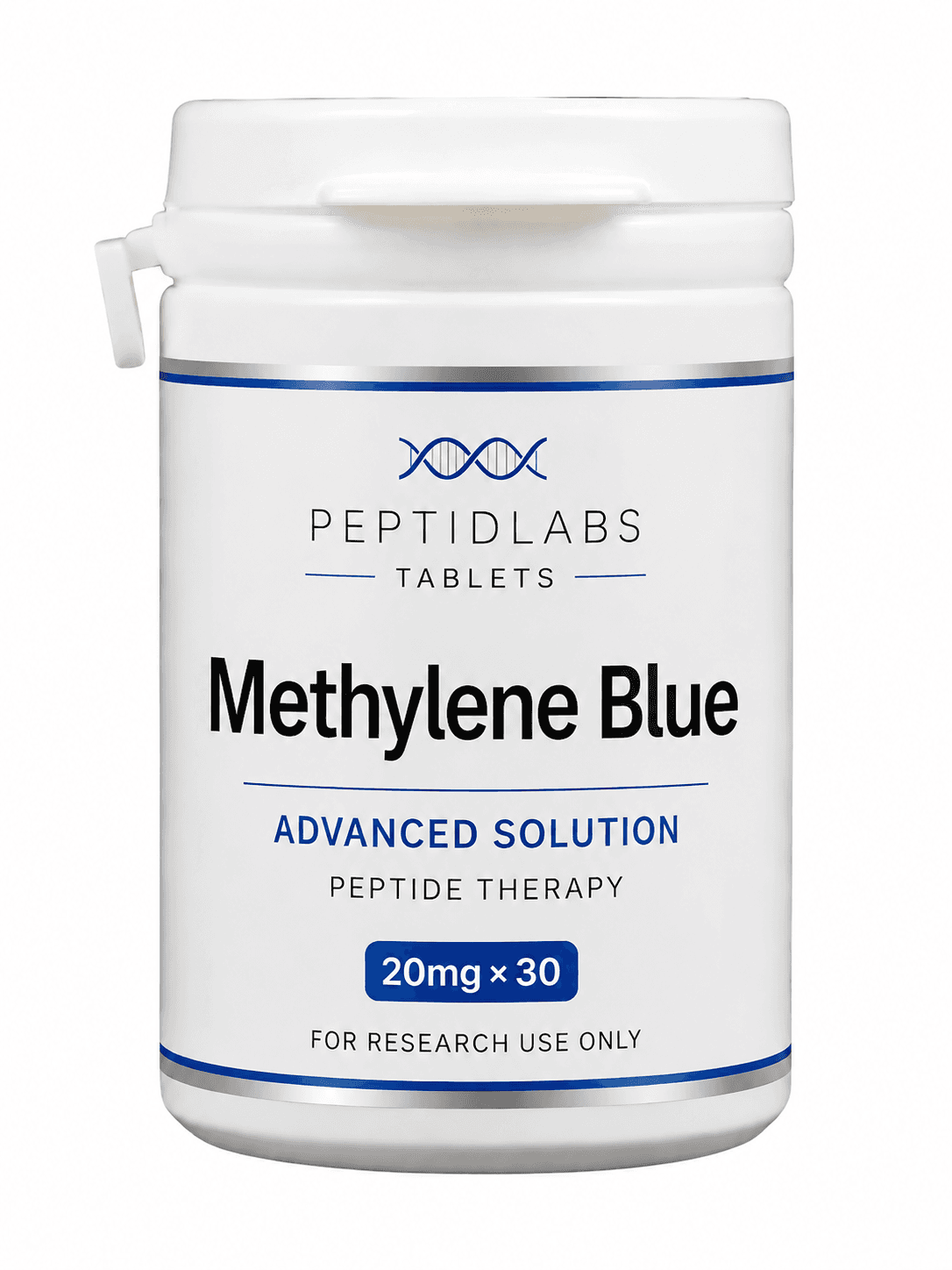
99%+ · 20mg · Tablets · MW: 373.9
Bulk discount
3+ pcs
€42.75
−5%
5+ pcs
€40.50
−10%
10+ pcs
€38.25
−15%
Discount is applied automatically at checkout.
Enter your email and we'll notify you when it's back:
Free shipping over €49
This product is sold strictly for in lab conditions (in vitro) research purposes. Not approved for human consumption.
Verified above 98%
98%+ guaranteed — most batches reach 99%+
Included
Independent analysis from accredited laboratories
EU Shipping
1-3 days across the EU (Bulgaria — 1-2 days)
Secure Payment
Card via Stripe or Cash on Delivery
Methylene Blue Tablets 20 mg × 30
USP Methylene Blue | Mitochondrial Electron Carrier | Nootropic & Mitochondrial Research
In short
Improves memory and focus by directly boosting energy production in your cells and brain.
Scientific review
Калина Тодорова
Magister Pharmaciae, MSc Pharmacy
Reviewed on
Methylene blue is the active ingredient (methylthioninium chloride) in research-grade USP material. It is one of the oldest synthetic compounds in pharmacology — first synthesized in 1876 by Heinrich Caro. The compound's redox-active phenothiazine core can shuttle electrons in cellular respiration, lending it both diagnostic (urine staining, antidote properties) and investigational metabolic uses.
Established mitochondrial electron carrier (E°' ≈ +11 mV) FDA-approved indication: methemoglobinemia USP grade — analytically defined identity & purity Long history of research data (>140 years)
Best sellers
Related resources
Methylene blue alternates between reduced (leuco-MB) and oxidized (MB+) forms with a midpoint potential of ~+11 mV, positioning it as an electron carrier compatible with mitochondrial complex I bypass. The compound also has MAO inhibition activity at low micromolar concentrations and binds to amyloid β oligomers in research models — making it a frequent subject in neurodegenerative research.
Methylene blue's electron-carrier activity supports research into bypassing dysfunctional complex I in aging and neurodegenerative models.
Adverse events at low doses are typically minimal: blue/green urine, transient nausea, blue staining of mucous membranes. At higher doses or with concurrent serotonergic medications, MAO inhibition can precipitate serotonin syndrome — a contraindication researchers must respect. Methylene blue is contraindicated in G6PD deficiency due to hemolysis risk.
References
Links to peer-reviewed publications on PubMed, cited in the peptide's scientific profile.
Methylene blue improves cognitive function via mitochondria
Rodent | Neurobiol Aging 2011
Riha et al. reported memory enhancement at low-dose methylene blue with improved mitochondrial complex IV activity.
View the study
Out of stockfor visceral fat

for weight loss
No reviews yet. Be the first.
Share your experience with this peptide. We publish after a short moderation.