for longevity
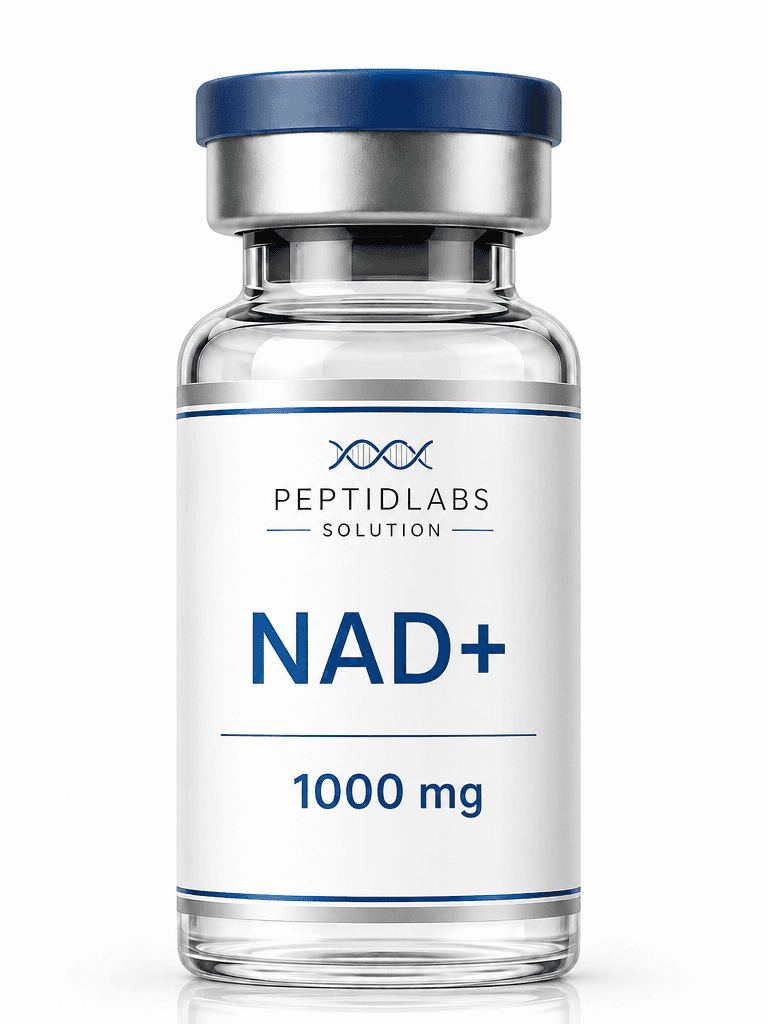
98%+ · 1000mg · Lyophilized
Bulk discount
3+ pcs
€57.00
−5%
5+ pcs
€54.00
−10%
10+ pcs
€51.00
−15%
Discount is applied automatically at checkout.
🎉 One free — saved €60
Preview: offer goes live at launch.
The catalog is not yet accepting orders. Join the list.
In Stock - Ships within 24 hours
Free shipping over €49
This product is sold strictly for in lab conditions (in vitro) research purposes. Not approved for human consumption.
Verified above 98%
98%+ verified — most batches reach 99%+
Included
Independent analysis from accredited laboratories
EU Shipping
3-7 days across the EU (Bulgaria — 1-2 days)
Secure Payment
Cash on delivery
NAD+
Essential Coenzyme | Mitochondrial Function | Longevity Support
In short
Central coenzyme in cellular respiration studied in models of energy metabolism, DNA repair, and sirtuin activation.
Best sellers
Education
Related resources
Ready-to-use starter kit
NAD+ is a vital coenzyme present in all living cells, which is not a peptide but a fundamental molecule for cellular metabolism. At the molecular level, it functions as an electron carrier for energy (ATP) production and serves as a substrate for enzymes responsible for DNA repair. Because its natural levels drop significantly with age, scientists actively study it in in vitro and animal models focused on aging processes and mitochondrial function. This product is intended strictly for laboratory research purposes and is not an approved medication for human use.
Research reagent for laboratory use only. Not a medicine. For medical questions, consult a physician.
Scientific review
Written by
Калина Тодорова
Magister Pharmaciae, MSc Pharmacy
Reviewed by
Борис Маринов
MSc Biochemistry & Molecular Biology
Reviewed on
NAD+ is a small molecule — a coenzyme — that your cells use as an electron carrier in energy-production reactions. It is not a peptide, but it is central to everything we study around aging and mitochondrial function. Levels drop sharply with age (~50% between ages 20–50), which makes exogenous NAD+ — given subcutaneously or intravenously — a standard research-protocol tool in longevity work. Supplied as a lyophilized 500 mg sterile vial for direct reconstitution in laboratory protocols.
Replenishes the mitochondrial NAD+ pool — critical for ATP production, levels drop ~50% between ages 20–50 Activates sirtuin-dependent pathways (SIRT1–7) — the enzymes for DNA repair and cellular-aging regulation Documented in a 6-hour IV infusion in 11 healthy volunteers without major adverse events (Sinclair lab) Supports PARP-dependent DNA repair — particularly relevant for oxidative-stress models Lyophilized ≥98% HPLC purity, COA with every batch, shipped from EU
NAD+ functions as an electron carrier in cellular respiration, transferring electrons to the mitochondrial electron transport chain to generate ATP. It also acts as a signaling molecule and substrate for sirtuins (SIRT1-7) and PARPs, which are critical for DNA repair and genomic stability. By replenishing systemic NAD+ pools, cellular metabolism is optimized and age-related metabolic decline is mitigated.
NAD+ is the obligate cofactor for sirtuins, a family of proteins that regulate cellular health, apoptosis, and aging. Declining NAD+ levels impair sirtuin activity, accelerating cellular senescence. Restoring these levels helps maintain genomic stability and delays age-related cellular degradation.
Dosing
The typical regimens you'll see in the published research - for reference when planning in vitro or in vivo experiments. Not medical advice.
Inject slowly to minimize local site irritation and stinging.
Must be administered slowly over 2-4 hours by a medical professional.
Disclaimer
These are regimens discussed in the research literature, not medical advice. Consult a healthcare provider before use.
Timing
Morning administration is preferred to align with natural circadian rhythms and prevent sleep disruption.
[Calculator]
Change water and dose · results update in real time
from product
Visual indicator
Pull to mark 20
20marks
Standard insulin syringe 1 ml (100 marks)
Concentration
500.00mg/ml
Dose volume
0.200ml
U-100 units
20units
Doses per vial
10doses
Recommended needle
29G / 1 ml insulin
Standard for peptide dosing — widely stocked
Cycle planner: vials for 12 weeks, cost, schedule
Opens full calculator
Results are reference values - for in vitro work. Verify against the published literature for the specific peptide.
[Step by step]
6 steps from a sealed vial to the injection. Plain language.
Peptide vial (1000 mg), bacteriostatic water vial, 1 larger syringe (3-5 ml) for drawing water and 1 insulin (1 ml) for doses. Alcohol swabs for sanitizing the caps.
Wash your hands before starting.
Wipe the rubber cap of the water vial with an alcohol swab. Insert the needle, invert the vial and draw exactly 2 ml. Get the exact volume from the calculator.
Larger syringe = smaller error in volume.
Wipe the peptide vial cap. Tilt the vial 45° and release the water SLOWLY down the inner wall. Peptides are fragile — a direct stream onto the powder denatures them.
SLOWLY · DOWN THE WALL · NOT ONTO THE POWDER.
Hold the vial between both palms and swirl slowly. DO NOT shake or flip sharply — peptides break down under mechanical stress.
DON'T SHAKE. Like tea — not like a cocktail.
The powder should fully dissolve. The solution is clear, no visible particles. If cloudy or with sediment — discard (wrong water or bad batch).
Clear = OK. Cloudy = discard.
With the insulin syringe draw the exact marks from the calculator. Swab the skin (abdomen 5 cm around the navel, thigh, or buttock), pinch a fold, insert at 45-90° and inject slowly.
Rotate sites every injection to avoid lipohypertrophy.
Schedule
Morning administration is preferred to align with natural circadian rhythms and prevent sleep disruption.
Subcutaneous NAD+ injections are known to cause a temporary stinging sensation. Diluting the dose or injecting very slowly can help mitigate this discomfort.
Important
Subcutaneous NAD+ injections are known to cause a temporary stinging sensation. Diluting the dose or injecting very slowly can help mitigate this discomfort.
1. Remove the NAD+ vial and bacteriostatic water from the refrigerator and allow them to reach room temperature.
2. Swab the rubber stoppers of both vials with isopropyl alcohol.
3. Draw the required volume of bacteriostatic water (e.g., 5ml for a 500mg vial to yield 100mg/ml).
4. Inject the water slowly down the inner wall of the NAD+ vial.
5. Gently swirl the vial until the lyophilized powder is completely dissolved. Do not shake vigorously.
6. Store the reconstituted solution in the refrigerator immediately.
Flushing (IV)
common
Chest tightness with rapid IV
common
Nausea
common
Injection-site reaction (s.c.)
common
Headache
uncommon
Compatibility
The pairings below come from research literature and established biohacker stacking patterns. Click a card for the full reasoning - when the partner is in our catalog you'll see a direct order link too.
This is a literature overview, not medical advice. Pairs not listed are not proven safe - they simply lack enough published data.
References
Links to peer-reviewed publications on PubMed, cited in the peptide's scientific profile.
Loss of NAD homeostasis in aging and disease
Review | Human & Animal | Various | NAD+ decline and aging
This comprehensive review by Sinclair D. et al. details how systemic NAD+ levels decline with age. It highlights the critical role of NAD+ in sirtuin activation and mitochondrial health. The authors conclude that restoring NAD+ levels can mitigate age-associated metabolic and neurodegenerative diseases.
View the studyA Pilot Study Investigating Changes in the Intact NAD+ Metabolome During a 6 h Intravenous Infusion of NAD+
Human | 11 participants | 6 hours | Pharmacokinetics and safety
Researchers administered intravenous NAD+ to healthy human cohorts to evaluate safety and metabolic fate. The study observed significant increases in plasma NAD+ and its metabolites without severe adverse events. Results suggest that IV administration effectively raises systemic NAD+ pools.
View the studyNAD+ in aging, metabolism, and neurodegeneration
Review | Human & Animal | Various | Metabolic regulation
This paper explores the intersection of NAD+ metabolism and cellular aging processes. It demonstrates that NAD+ depletion impairs mitochondrial function and accelerates cellular senescence. The findings support therapeutic strategies aimed at replenishing NAD+ to preserve metabolic health.
View the study
for sexual health
No reviews yet. Be the first.
Share your experience with this peptide. We publish after a short moderation.