samplenon-hormonal hair growth
98%+ · 5mg · Lyophilized
Bulk discount
3+ pcs
€57.00
−5%
5+ pcs
€54.00
−10%
10+ pcs
€51.00
−15%
Discount is applied automatically at checkout.
Enter your email and we'll notify you when it's back:
Free shipping over €49
This product is sold strictly for in lab conditions (in vitro) research purposes. Not approved for human consumption.
Verified above 98%
98%+ verified — most batches reach 99%+
Included
Independent analysis from accredited laboratories
EU Shipping
3-7 days across the EU (Bulgaria — 1-2 days)
Secure Payment
Cash on delivery
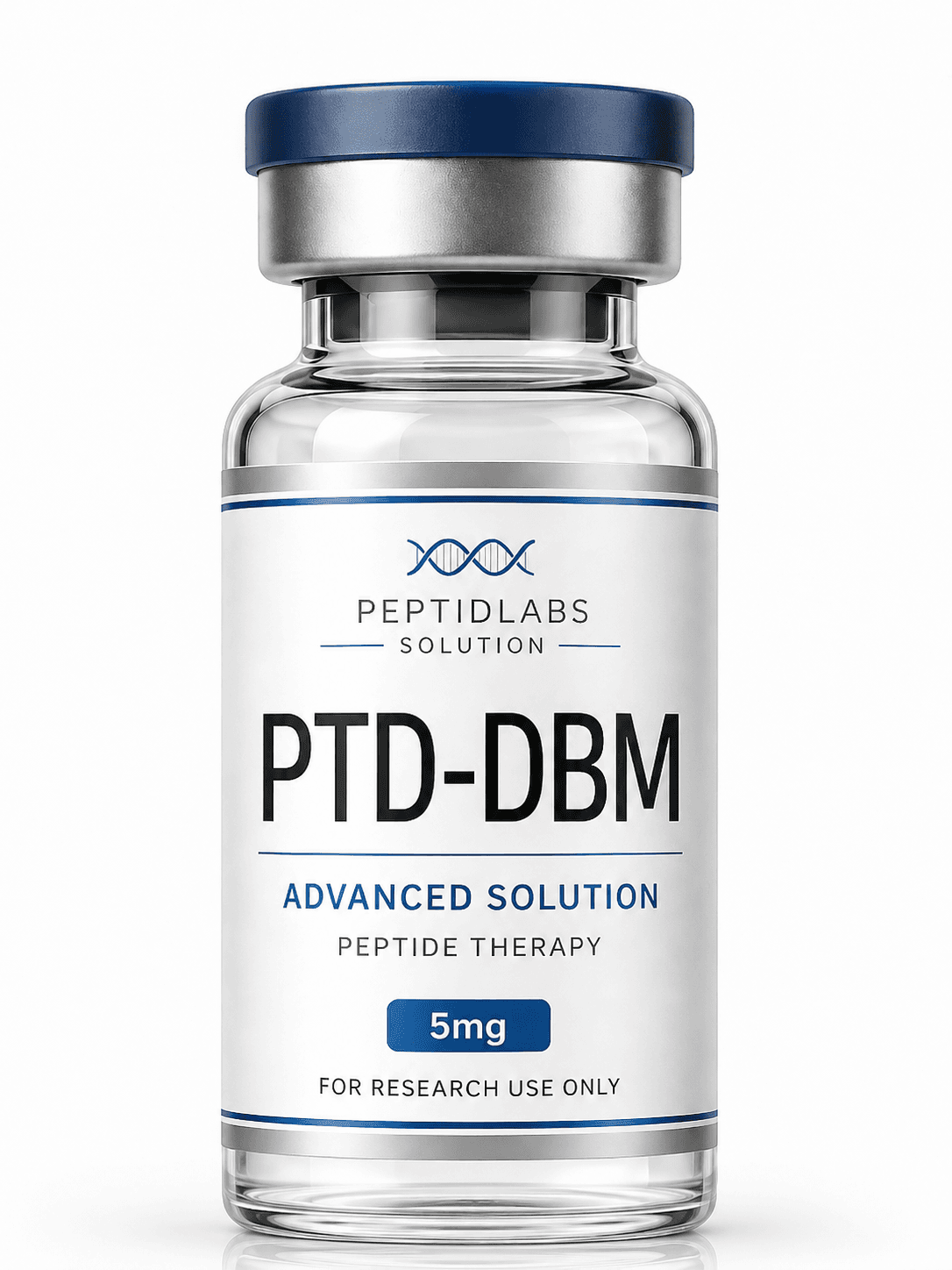
PTD-DBM
Wnt Pathway Modulator | Hair Follicle Research | Cell-Penetrating Peptide
In short
Peptide inhibiting CXXC5-Dishevelled interaction, studied in dermatological models for Wnt signaling modulation.
PTD-DBM is a synthetic, cell-penetrating peptide developed for scientific research. At the molecular level, it interacts with specific cellular proteins to prevent the normal suppression of the Wnt/β-catenin signaling pathway. Researchers are currently studying this mechanism in in vitro and animal models to explore its role in hair follicle development and cellular regeneration. This compound is strictly for laboratory research purposes and is not an approved medication or cosmetic product for human use.
Research reagent for laboratory use only. Not a medicine. For medical questions, consult a physician.
Scientific review
Best sellers
Education
Related resources
Ready-to-use starter kit
Written by
Калина Тодорова
Magister Pharmaciae, MSc Pharmacy
Reviewed by
Борис Маринов
MSc Biochemistry & Molecular Biology
Reviewed on
PTD-DBM is a synthetic cell-penetrating peptide developed by researchers at Yonsei University. It consists of a protein transduction domain attached to a Dishevelled-binding motif. The peptide is designed to intervene in the Wnt/β-catenin signaling pathway, which regulates hair follicle development and regeneration. Researchers utilize PTD-DBM primarily to study hair neogenesis and the cellular mechanisms underlying androgenetic alopecia.
CXXC5-Dvl interaction inhibitor Wnt/β-catenin pathway activation Hair regrowth comparable to minoxidil (Lee 2017) Topical application in hair follicles
PTD-DBM functions by competitively binding to the Dishevelled (Dvl) protein inside cells. This action prevents the CXXC5 protein from binding to Dvl, an interaction that normally suppresses the Wnt/β-catenin signaling pathway. By blocking this negative feedback loop, the peptide restores Wnt/β-catenin signaling activity. Elevated Wnt signaling promotes the activation of stem cells in the hair follicle bulge, stimulating new hair growth and follicle regeneration.
PTD-DBM targets the cellular pathways responsible for hair follicle creation and cycling. Research indicates it can induce hair neogenesis when applied to areas of hair loss.
Dosing
The typical regimens you'll see in the published research - for reference when planning in vitro or in vivo experiments. Not medical advice.
Often combined with valproic acid in experimental models.
Applied immediately following microneedling session.
Disclaimer
These are regimens discussed in the research literature, not medical advice. Consult a healthcare provider before use.
Timing
Evening application preferred if used topically; immediately after microneedling if used as an adjunct.
[Calculator]
Change water and dose · results update in real time
from product
Visual indicator
Pull to mark 10
10marks
Standard insulin syringe 1 ml (100 marks)
Concentration
2.50mg/ml
Dose volume
0.100ml
U-100 units
10units
Doses per vial
20doses
Recommended needle
29G–30G / 1 ml insulin
Small volume — draw slowly; 30G works for finer precision
Cycle planner: vials for 12 weeks, cost, schedule
Opens full calculator
Results are reference values - for in vitro work. Verify against the published literature for the specific peptide.
[Step by step]
6 steps from a sealed vial to the injection. Plain language.
Peptide vial (5 mg), bacteriostatic water vial, 1 larger syringe (3-5 ml) for drawing water and 1 insulin (1 ml) for doses. Alcohol swabs for sanitizing the caps.
Wash your hands before starting.
Wipe the rubber cap of the water vial with an alcohol swab. Insert the needle, invert the vial and draw exactly 2 ml. Get the exact volume from the calculator.
Larger syringe = smaller error in volume.
Wipe the peptide vial cap. Tilt the vial 45° and release the water SLOWLY down the inner wall. Peptides are fragile — a direct stream onto the powder denatures them.
SLOWLY · DOWN THE WALL · NOT ONTO THE POWDER.
Hold the vial between both palms and swirl slowly. DO NOT shake or flip sharply — peptides break down under mechanical stress.
DON'T SHAKE. Like tea — not like a cocktail.
The powder should fully dissolve. The solution is clear, no visible particles. If cloudy or with sediment — discard (wrong water or bad batch).
Clear = OK. Cloudy = discard.
With the insulin syringe draw the exact marks from the calculator. Swab the skin (abdomen 5 cm around the navel, thigh, or buttock), pinch a fold, insert at 45-90° and inject slowly.
Rotate sites every injection to avoid lipohypertrophy.
Schedule
Evening application preferred if used topically; immediately after microneedling if used as an adjunct.
In clinical research, PTD-DBM is rarely injected subcutaneously; it is predominantly formulated into topical serums or applied directly to the dermis following microneedling to bypass the stratum corneum.
Important
In clinical research, PTD-DBM is rarely injected subcutaneously; it is predominantly formulated into topical serums or applied directly to the dermis following microneedling to bypass the stratum corneum.
1. Remove the 5mg PTD-DBM vial from the freezer and allow it to reach room temperature.
2. Wipe the vial stopper with a sterile alcohol swab.
3. Inject an appropriate volume of bacteriostatic water or specialized carrier solution (e.g., 5ml for a 1mg/ml concentration).
4. Swirl the vial gently until the lyophilized powder is completely dissolved. Do not shake.
5. Store the reconstituted solution in the refrigerator and use within 30 days.
Long-term safety profile not yet established. Use only under medical supervision.
May cause local irritation, redness, or itching at the application site.
Theoretical risk of overstimulating Wnt pathways in unintended tissues if absorbed systemically.
Not recommended for individuals with a history of skin malignancies.
Safety during pregnancy and breastfeeding has not been evaluated.
References
Links to peer-reviewed publications on PubMed, cited in the peptide's scientific profile.
Targeting of CXXC5 by a Competing Peptide Stimulates Hair Regrowth and Wound-Induced Hair Neogenesis
Animal | Mice | 28 days | Hair follicle neogenesis
Researchers demonstrated that PTD-DBM disrupts the CXXC5-Dvl interaction, activating the Wnt/β-catenin pathway. The peptide successfully induced hair regrowth and promoted new follicle formation in murine models, especially when combined with valproic acid.
View the studyCXXC5 is a negative-feedback regulator of the Wnt/β-catenin pathway involved in osteoblast differentiation
In vitro | Cell cultures | Variable | Wnt pathway modulation
This foundational study identified CXXC5 as a negative regulator of Wnt signaling. While focused on bone differentiation, it established the mechanism that PTD-DBM later utilized to target hair follicle stem cells.
View the studyThe role of Wnt/β-catenin signaling in hair follicle development and regeneration
Review | Literature | N/A | Pathway analysis
A comprehensive review detailing how Wnt/β-catenin signaling is essential for hair follicle cycling. It provides the theoretical framework for why upregulating this pathway via agents like PTD-DBM leads to hair growth.

for longevity

for sexual health
No reviews yet. Be the first.
Share your experience with this peptide. We publish after a short moderation.