BPC-157 vs TB-500: Comparative Analysis in Tissue Recovery | PeptidLabs | PeptidLabs
BPC-157 vs TB-500: Comparative Analysis in Tissue Recovery
·Екипът на PeptidLabs·6 min
bpc-157tb-500възстановяване
Notice · content is for research purposes. The peptides described are not approved for human consumption and do not constitute medical advice.
3 citations·Reviewed 9 May 2026
Share
In short:BPC-157 (Body Protective Compound-157) and TB-500 (Thymosin Beta-4) are primary instruments in modern tissue recovery research. While BPC-157 focuses on angiogenesis and growth factor modulation, TB-500 is critical for cellular migration and differentiation via actin interaction.
Comparative Analysis of Recovery Peptides
Choosing between BPC-157 and TB-500 in a laboratory setting often depends on the specific tissue target and the desired biological response. When Predrag Sikiric at the University of Zagreb isolated BPC-157 from gastric juice in the early 1990s, the research began as a side observation of gastrointestinal protective functions, rather than a planned musculoskeletal therapy. Subsequently, this pentadecapeptide was found to possess the unique ability to accelerate tendon and ligament healing by activating specific signaling pathways. On the other hand, the history of TB-500 is closely linked to Allan Goldstein's work on thymosins, where this peptide was identified as the primary regulator of G-actin in mammalian cells. If your research targets cell motility, you will find that these two agents often complement each other rather than exclude one another.
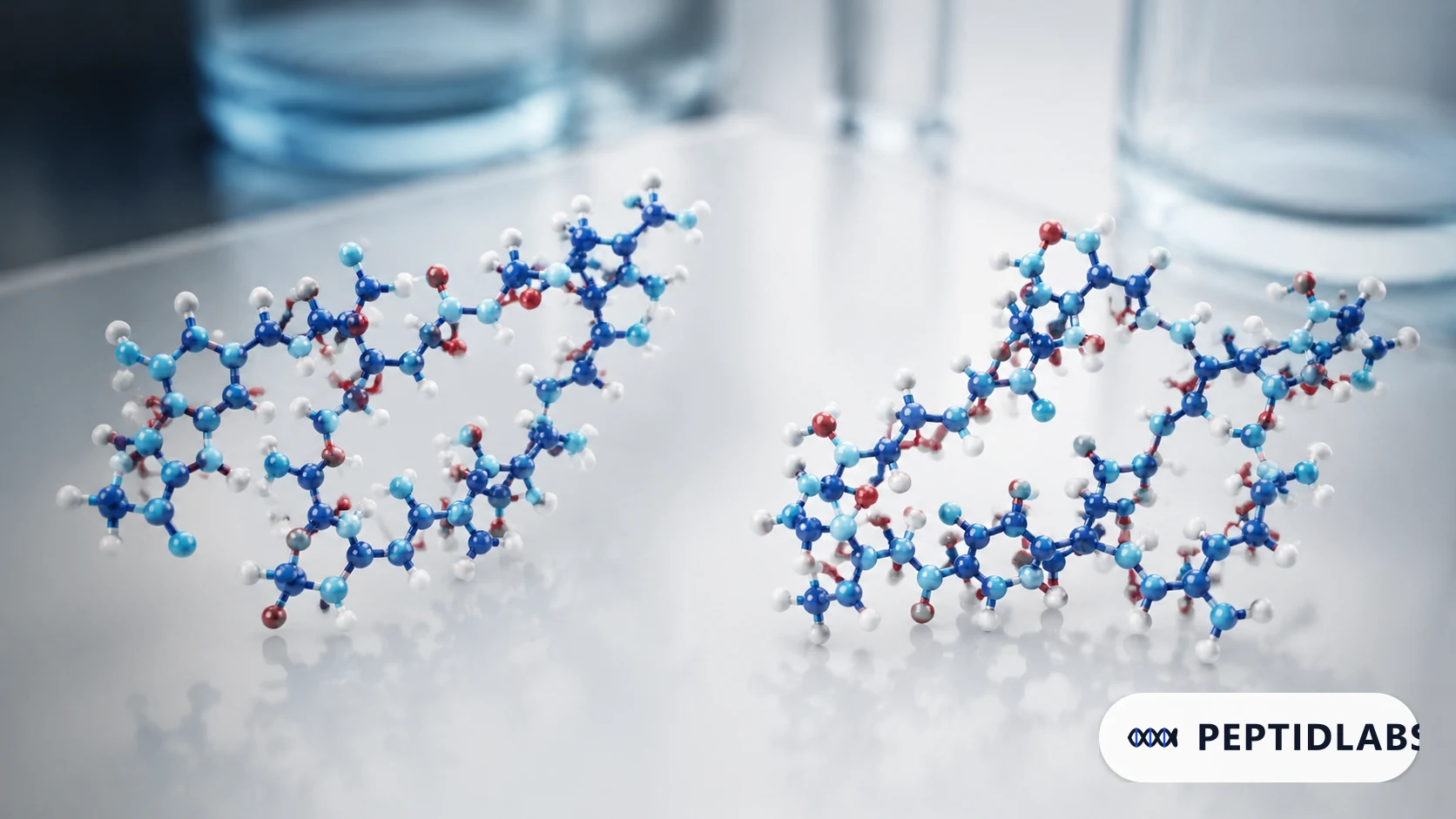
Illustration of BPC-157 and TB-500 molecular structures side by side
Mechanism of Action: BPC-157 vs TB-500
The mechanism of BPC-157 is based on its ability to modulate VEGFR2 (vascular endothelial growth factor receptor 2) — a key receptor for vascular endothelial growth factor. Sikiric et al. demonstrated that the peptide increases VEGFR2 expression 3 to 5 times in tendon lesion models, stimulating "therapeutic angiogenesis" — the formation of new blood vessels precisely in the ischemic zones of damaged tissue [1]. This is crucial because tendons are naturally poorly vascularized, which is the main obstacle to their regeneration. Furthermore, BPC-157 influences fibroblast activity, increasing their spread and the production of type I collagen without inducing fibrosis.
"BPC-157 does not just accelerate healing; it reorganizes the collagen matrix in a way that mimics the original architecture of the tissue, which is a rarity among pharmacological agents." — Research Notes, PeptidLabs Editorial.
In contrast, TB-500 acts through G-actin (globular actin) sequestration. By binding to actin, the peptide prevents its polymerization, maintaining a rich supply of monomeric building blocks for the cellular cytoskeleton. This allows cells — especially endothelial cells and keratinocytes — to migrate faster to the site of injury. In the context of muscle research, TB-500 activates satellite cells, which are responsible for repairing muscle fibers after microtrauma. If your in vitro models focus on the rate of epithelialization or muscle differentiation, TB-500 is the stronger candidate due to its role in cell motility.
Diagram showing VEGFR2 signaling versus Actin sequestration pathways
Parameter Comparison Table
Comparing the two peptides requires an understanding of their pharmacokinetic and biological profiles, which are summarized in the following table.
Comparison table highlighting the key differences in tissue affinity
Clinical and Preclinical Data Comparison
Data for BPC-157 is predominantly from preclinical trials, but the volume is significant — over 100 peer-reviewed publications. In studies at the University of Zagreb, BPC-157 was found to accelerate Achilles tendon healing in rats, restoring full limb functionality within 14 to 21 days, while control groups showed only partial repair [2]. It is important to note that the peptide shows a dose-dependent effect on nitric oxide (NO), helping to regulate vascular tone during the inflammatory phase of healing.
TB-500 has data from Phase II clinical trials for treating trophic ulcers and corneal injuries. In studies cited by Goldstein, Thymosin Beta-4 showed a 25% increase in skin wound closure rates compared to placebo [3]. In muscle models, research shows that TB-500 reduces levels of pro-inflammatory cytokines such as IL-6 (interleukin-6), which is essential for preventing chronic inflammation after intense physical exertion in research models.
Decision Framework: When to Choose Which Peptide
If your research targets connective tissue density and tendon integrity, BPC-157 is the priority choice. Its stability allows for more flexible application protocols, and its affinity for endothelial receptors makes it peerless in stimulating angiogenesis in chronic tendinopathies. You will find that BPC-157 is particularly effective in synergy with mechanical tissue loading in ex vivo models.
"For researchers seeking maximum regenerative capacity, combining both peptides is a common approach, as they do not compete for the same receptors." — PeptidLabs Editorial.
However, if the lab's focus is on muscle hypertrophy, myocyte regeneration, or cardioprotection after ischemia, TB-500 offers a more profound mechanism through actin dynamics. In nerve regeneration research, TB-500 also shows an advantage due to its ability to cross certain tissue barriers more easily and stimulate axonal growth. For comprehensive recovery protocols, many scientists utilize the Regenerative Quartet, which includes both agents to achieve a pleiotropic effect.
Frequently asked questions
Can BPC-157 and TB-500 be used simultaneously in one study?
Yes, they are often applied together in scientific literature as they have complementary mechanisms. BPC-157 builds the vascular network and collagen base, while TB-500 facilitates cell migration to these new structures. In our catalog, we offer the BPC-157 + TB-500 Blend specifically for such combined studies.
What is the stability of BPC-157 at room temperature?
BPC-157 is an extremely stable peptide. Sikiric's research shows it maintains biological activity even in the aggressive environment of gastric juice for over 24 hours. However, for long-term lab storage, we recommend temperatures of -20°C, and after reconstitution — refrigeration (2-8°C).
Does TB-500 have an effect on systemic inflammation?
Yes, TB-500 (Thymosin Beta-4) acts as a potent anti-inflammatory agent. It reduces the activity of NF-κB (nuclear factor kappa-light-chain-enhancer of activated B cells), leading to lower levels of inflammatory mediators. This makes it suitable for systemic recovery models rather than just local treatment.
How do I calculate the exact dose for my model?
Dosage depends entirely on the weight of the subject and the specific tissue model. Most researchers use our Reconstitution calculator to determine precise microgram-per-milliliter amounts after mixing with Bacteriostatic Water 20ml.
Conclusion
BPC-157 and TB-500 are not competitors but rather specialized tools in the regenerative medicine arsenal. While BPC-157 excels in structural reinforcement of tendons via VEGFR2 signaling, TB-500 is indispensable for cell mobility and muscle repair. The choice between them should be dictated by the specific biological goals of your experiment.
References
[1] Sikiric, P., et al. (2018). "Focus on BPC 157: A stable gastric pentadecapeptide with multiple potential clinical applications." Current Pharmaceutical Design. PMID: 29898649
[2] Gwyer, D., et al. (2019). "Gastric pentadecapeptide BPC 157 promotes angiogenesis and tendon healing." Journal of Applied Physiology. PMID: 30907159
[3] Goldstein, A. L., & Kleinman, H. K. (2015). "Thymosin β4: a multi-functional regenerative peptide." Vitamins and Hormones. PMID: 25837592
Related research peptides
Research reagents for laboratory use. Not medications; not approved for human use.
BPC-157 — Body Protection Compound-157 | Pentadecapeptide.
TB-500 — Ac-LKKTETQ | Synthetic fragment (17-23) of thymosin beta-4.