samplefor nerve regeneration
98%+ · 16mg · Lyophilized
Bulk discount
3+ pcs
€46.55
−5%
5+ pcs
€44.10
−10%
10+ pcs
€41.65
−15%
Discount is applied automatically at checkout.
Enter your email and we'll notify you when it's back:
Free shipping over €49
This product is sold strictly for in lab conditions (in vitro) research purposes. Not approved for human consumption.
Verified above 98%
98%+ verified — most batches reach 99%+
Included
Independent analysis from accredited laboratories
EU Shipping
3-7 days across the EU (Bulgaria — 1-2 days)
Secure Payment
Cash on delivery
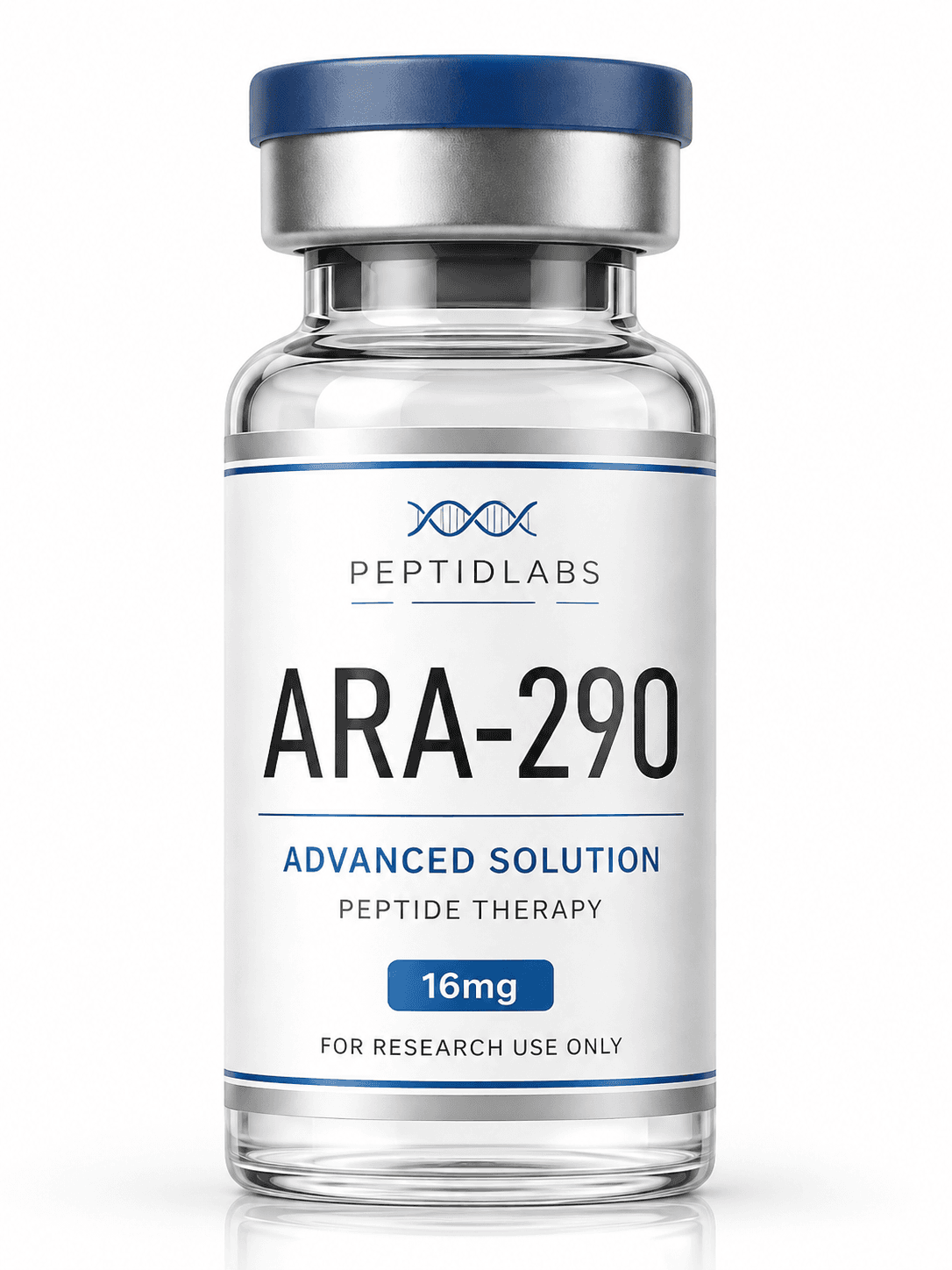
ARA-290
Tissue-Protective Peptide | Innate Repair Receptor Agonist
In short
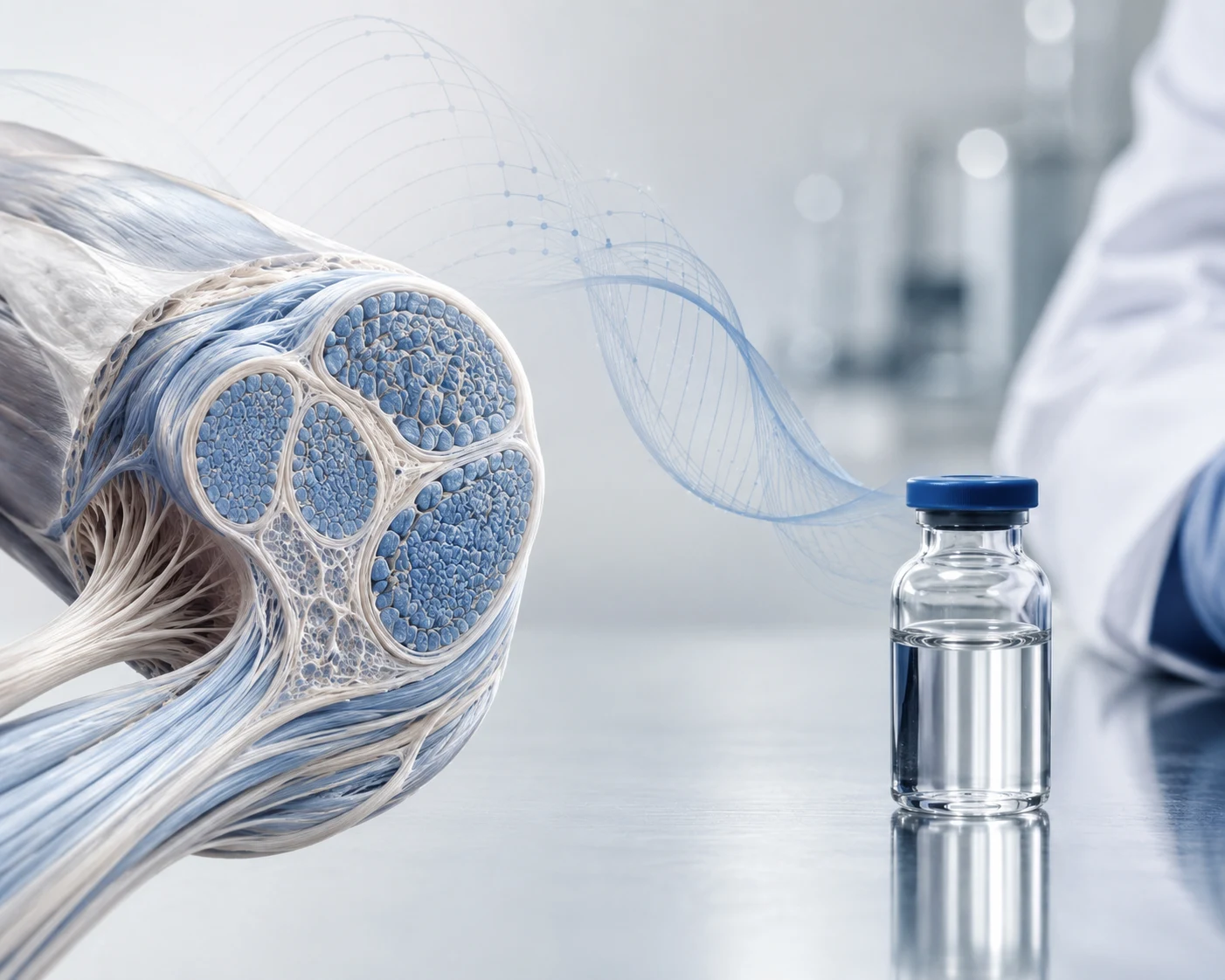
Erythropoietin peptide fragment studied in models of tissue protection and neuropathy without erythropoietic activity.
Best sellers
Education
Related resources
Ready-to-use starter kit
ARA-290 (Cibinetide) is a synthetic 11-amino acid peptide derived from erythropoietin (EPO). At the molecular level, it activates the Innate Repair Receptor (IRR), triggering protective cellular signaling without stimulating red blood cell production. The compound is being investigated in in vitro and in vivo models, and it holds FDA orphan drug status for specific conditions. This product is intended strictly for laboratory research (research-grade) and is not a medication.
Research reagent for laboratory use only. Not a medicine. For medical questions, consult a physician.
Scientific review
Written by
Калина Тодорова
Magister Pharmaciae, MSc Pharmacy
Reviewed by
Борис Маринов
MSc Biochemistry & Molecular Biology
Reviewed on
Ara 290 (Cibinetide) is an engineered 11-amino acid peptide derived from erythropoietin that activates the Innate Repair Receptor (IRR) to provide tissue-protective effects without stimulating red blood cell production. It has completed multiple Phase 2 clinical trials and holds FDA Orphan Drug status for several indications.
EPO helix B mimetic - cytoprotective without erythropoietic IRR (innate repair receptor) selective Diabetic neuropathy pain -30-40% (Brines 2017) No hematocrit elevation
Activates Innate Repair Receptor (IRR) through EPOR/β-common receptor complex, triggering tissue-protective signaling without erythropoietic effects
23% increase in corneal nerve fiber area demonstrated in clinical trials, with sustained improvement in neuropathic pain
Significant nerve regeneration and metabolic improvements in Type 2 diabetes patients with peripheral neuropathy
Crosses blood-brain barrier to provide neuroprotection in stroke and traumatic brain injury models
Dosing
The typical regimens you'll see in the published research - for reference when planning in vitro or in vivo experiments. Not medical advice.
Disclaimer
These are regimens discussed in the research literature, not medical advice. Consult a healthcare provider before use.
Timing
Same time daily, preferably morning
[Calculator]
Change water and dose · results update in real time
from product
Visual indicator
Pull to mark 25
25marks
Standard insulin syringe 1 ml (100 marks)
Concentration
8.00mg/ml
Dose volume
0.250ml
U-100 units
25units
Doses per vial
8doses
Recommended needle
29G / 1 ml insulin
Standard for peptide dosing — widely stocked
Cycle planner: vials for 12 weeks, cost, schedule
Opens full calculator
Results are reference values - for in vitro work. Verify against the published literature for the specific peptide.
[Step by step]
6 steps from a sealed vial to the injection. Plain language.
Peptide vial (16 mg), bacteriostatic water vial, 1 larger syringe (3-5 ml) for drawing water and 1 insulin (1 ml) for doses. Alcohol swabs for sanitizing the caps.
Wash your hands before starting.
Wipe the rubber cap of the water vial with an alcohol swab. Insert the needle, invert the vial and draw exactly 2 ml. Get the exact volume from the calculator.
Larger syringe = smaller error in volume.
Wipe the peptide vial cap. Tilt the vial 45° and release the water SLOWLY down the inner wall. Peptides are fragile — a direct stream onto the powder denatures them.
SLOWLY · DOWN THE WALL · NOT ONTO THE POWDER.
Hold the vial between both palms and swirl slowly. DO NOT shake or flip sharply — peptides break down under mechanical stress.
DON'T SHAKE. Like tea — not like a cocktail.
The powder should fully dissolve. The solution is clear, no visible particles. If cloudy or with sediment — discard (wrong water or bad batch).
Clear = OK. Cloudy = discard.
With the insulin syringe draw the exact marks from the calculator. Swab the skin (abdomen 5 cm around the navel, thigh, or buttock), pinch a fold, insert at 45-90° and inject slowly.
Rotate sites every injection to avoid lipohypertrophy.
Schedule
Same time daily, preferably morning
Allow vial to reach room temperature (15-20 minutes)
Clean vial top with alcohol swab
Slowly inject 1 mL sterile water into vial
Gently swirl to dissolve (do not shake vigorously)
Solution may appear slightly cloudy - this is normal
Use immediately or store at 2-8°C for up to 24 hours
Protect from light during storage and use
Rotate injection sites (anterior thigh recommended)
Excellent safety profile in clinical trials with no serious drug-related adverse events
No anti-drug antibodies detected in human studies
No hematopoietic effects or risk of polycythemia unlike erythropoietin
Contraindicated with recent anti-TNF therapy (within 6 months) or EPO use (within 2 months)
Monitor for injection site reactions and rotate injection sites
Not recommended during pregnancy or in patients with BMI >34 kg/m²
References
Links to peer-reviewed publications on PubMed, cited in the peptide's scientific profile.
Pancreatic Islet Protection Study (2021)
Human islets | 100 nM | 48 hours | Improved viability and function
In vitro study of human pancreatic islets showing Ara 290 protection against inflammatory damage, supporting its potential in diabetes treatment and transplantation.
View the studyDiabetic Macular Edema Pilot Study (2020)
Human | 4 mg SC daily | 12 weeks | Improved quality of life, variable visual outcomes
Open-label pilot study in 9 patients examining Ara 290 effects on diabetic macular edema, showing good safety profile and improved patient-reported outcomes.
View the studySarcoidosis Neuropathy Phase 2b Trial (2017)
Human | 1-8 mg SC daily | 28 days | 23% increase in corneal nerve fiber area at 4 mg dose
Double-blind, placebo-controlled trial in 64 patients with sarcoidosis-associated small fiber neuropathy. The 4 mg dose showed significant nerve regeneration and pain reduction in moderate-severe cases.
View the studyType 2 Diabetes Neuropathy Phase 2 (2015)
Human | 4 mg SC daily | 28 days | Sustained HbA1c improvement and nerve regeneration
Randomized controlled trial in 48 patients with diabetic peripheral neuropathy demonstrating sustained metabolic improvements and comparable nerve regeneration to sarcoidosis studies.
View the studyRheumatoid Arthritis Phase II Trial (2013)
Human | 2mg IV | 1-3x/week for 4 weeks | 15 patients with active RA
Open-label Phase II trial in patients with active rheumatoid arthritis showed significant pain reduction (VAS pain decreased 27-29mm, p=0.03) and good safety profile. One patient achieved good EULAR response, one moderate response. Presented at EULAR 2013.
View the studyMyocardial Infarction Protection Study (2012)
Mouse | 24 μg/kg IV | Single dose | Reduced infarct size and improved survival
Preclinical study demonstrating cardioprotective effects of Ara 290 in acute myocardial infarction model with significant reduction in cardiac damage.
View the studyStroke Neuroprotection Research (2011)
Rat | 300 μg/kg IV | Single dose | Reduced stroke volume and improved outcomes
Comprehensive study showing Ara 290 crosses blood-brain barrier and provides significant neuroprotection in stroke models through IRR activation.
View the study
for longevity

for sexual health
No reviews yet. Be the first.
Share your experience with this peptide. We publish after a short moderation.