antioxidant / detox
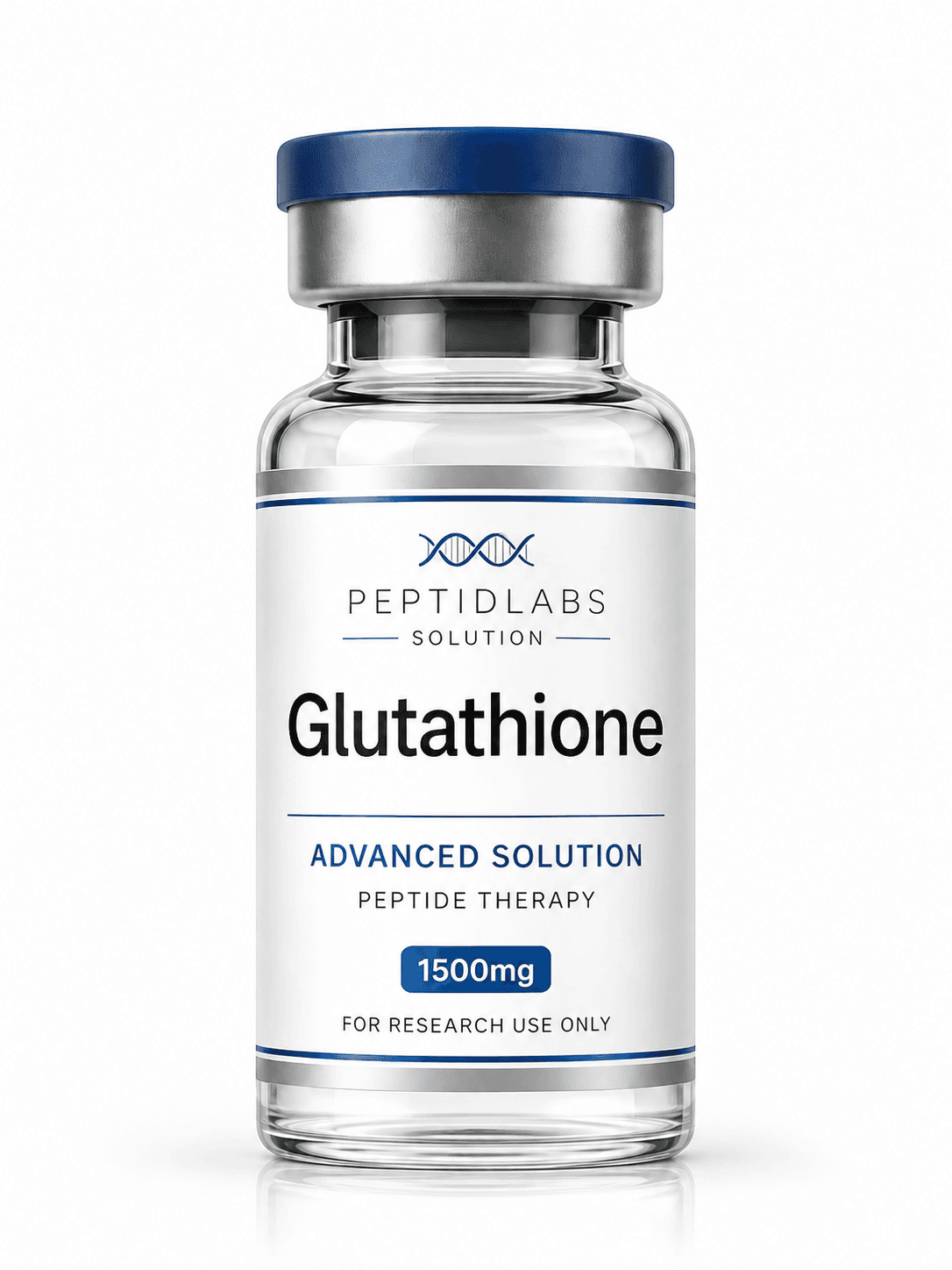
99%+ · 1500mg · Lyophilized
Bulk discount
3+ pcs
€56.05
−5%
5+ pcs
€53.10
−10%
10+ pcs
€50.15
−15%
Discount is applied automatically at checkout.
🎉 One free — saved €59
Preview: offer goes live at launch.
The catalog is not yet accepting orders. Join the list.
In Stock - Ships within 24 hours
Free shipping over €49
This product is sold strictly for in lab conditions (in vitro) research purposes. Not approved for human consumption.
Verified above 98%
98%+ verified — most batches reach 99%+
Included
Independent analysis from accredited laboratories
EU Shipping
3-7 days across the EU (Bulgaria — 1-2 days)
Secure Payment
Cash on delivery
Glutathione
Master Antioxidant | Tripeptide | GSH
In short
Tripeptide and primary intracellular antioxidant studied for maintaining redox balance and oxidative stress protection.
Best sellers
Related resources
Ready-to-use starter kit
Glutathione is a naturally occurring tripeptide composed of the amino acids glutamate, cysteine, and glycine, frequently referred to as the master cellular antioxidant. At the molecular level, it neutralizes reactive oxygen species through its sulfhydryl group, facilitates cellular detoxification, and regenerates other antioxidants like vitamins C and E. Researchers study this molecule in laboratory (in vitro) and animal models to understand its role in cellular defense mechanisms, immune function, and oxidative stress. This product is strictly research-grade and is not an approved medication or dietary supplement for human consumption.
Research reagent for laboratory use only. Not a medicine. For medical questions, consult a physician.
Scientific review
Written by
Калина Тодорова
Magister Pharmaciae, MSc Pharmacy
Reviewed by
Борис Маринов
MSc Biochemistry & Molecular Biology
Reviewed on
Glutathione (GSH) is a tripeptide composed of glutamate, cysteine, and glycine, often called the body's 'master antioxidant.' Found in virtually every cell, it plays critical roles in neutralizing free radicals, detoxifying harmful substances, recycling other antioxidants (vitamins C and E), and supporting immune function. Glutathione levels decline with age and are depleted by stress, toxins, and certain diseases. Injectable forms bypass poor oral bioavailability to deliver glutathione directly to tissues.
Main intracellular antioxidant Cytochrome P450 detoxification support IV administration for oxidative stress GSH/GSSG ratio - universal redox biomarker
Glutathione directly neutralizes reactive oxygen species via its sulfhydryl group, conjugates toxins for excretion (Phase II detoxification), recycles vitamins C and E, and supports optimal lymphocyte function. The tripeptide's unique gamma peptide bond protects it from degradation by most peptidases.
Glutathione is the body's primary intracellular antioxidant. Its sulfhydryl group donates electrons to neutralize free radicals and reactive oxygen species before they damage cells.
Regenerates oxidized vitamins C and E back to their active forms, extending their protective capacity through the glutathione-ascorbate cycle.
Maintains optimal GSH/GSSG ratio (typically >100:1 in healthy cells). This ratio is a key indicator of cellular health and oxidative stress status.
Dosing
The typical regimens you'll see in the published research - for reference when planning in vitro or in vivo experiments. Not medical advice.
Disclaimer
These are regimens discussed in the research literature, not medical advice. Consult a healthcare provider before use.
Timing
No specific timing required. Some prefer morning administration. IV often given in clinical settings.
[Calculator]
Change water and dose · results update in real time
from product
Visual indicator
Pull to mark 20
20marks
Standard insulin syringe 1 ml (100 marks)
Concentration
750.00mg/ml
Dose volume
0.200ml
U-100 units
20units
Doses per vial
10doses
Recommended needle
29G / 1 ml insulin
Standard for peptide dosing — widely stocked
Cycle planner: vials for 12 weeks, cost, schedule
Opens full calculator
Results are reference values - for in vitro work. Verify against the published literature for the specific peptide.
[Step by step]
6 steps from a sealed vial to the injection. Plain language.
Peptide vial (1500 mg), bacteriostatic water vial, 1 larger syringe (3-5 ml) for drawing water and 1 insulin (1 ml) for doses. Alcohol swabs for sanitizing the caps.
Wash your hands before starting.
Wipe the rubber cap of the water vial with an alcohol swab. Insert the needle, invert the vial and draw exactly 2 ml. Get the exact volume from the calculator.
Larger syringe = smaller error in volume.
Wipe the peptide vial cap. Tilt the vial 45° and release the water SLOWLY down the inner wall. Peptides are fragile — a direct stream onto the powder denatures them.
SLOWLY · DOWN THE WALL · NOT ONTO THE POWDER.
Hold the vial between both palms and swirl slowly. DO NOT shake or flip sharply — peptides break down under mechanical stress.
DON'T SHAKE. Like tea — not like a cocktail.
The powder should fully dissolve. The solution is clear, no visible particles. If cloudy or with sediment — discard (wrong water or bad batch).
Clear = OK. Cloudy = discard.
With the insulin syringe draw the exact marks from the calculator. Swab the skin (abdomen 5 cm around the navel, thigh, or buttock), pinch a fold, insert at 45-90° and inject slowly.
Rotate sites every injection to avoid lipohypertrophy.
Schedule
No specific timing required. Some prefer morning administration. IV often given in clinical settings.
Glutathione is available as a pre-mixed injectable from compounding pharmacies by prescription. IV administration should be performed in clinical settings due to anaphylaxis risk. IM and SubQ can be self-administered after proper training.
Important
Glutathione is available as a pre-mixed injectable from compounding pharmacies by prescription. IV administration should be performed in clinical settings due to anaphylaxis risk. IM and SubQ can be self-administered after proper training.
Most glutathione injections come pre-mixed - no reconstitution required
If lyophilized: reconstitute with sterile water or bacteriostatic water per manufacturer instructions
Inspect solution - should be clear and colorless to slightly yellow
For IM/SubQ: Clean injection site with alcohol, draw prescribed dose
For IV: Administer as slow push or dilute in normal saline for infusion
IM injection: Deltoid or gluteal muscle at 90° angle
SubQ injection: Abdomen or thigh at 45° angle
Rotate injection sites to prevent tissue irritation
Generally well-tolerated when used appropriately
Injection site pain/stinging is common if pH is not properly balanced (optimal pH 6.0-7.0) - quality formulations should be pH-buffered close to physiological levels
Serious adverse events are rare but include anaphylaxis (especially IV) and potential hepatotoxicity with high doses
Gastrointestinal discomfort (bloating, cramping) may occur
May worsen asthma symptoms in susceptible individuals - avoid inhaled forms
Long-term use may reduce zinc levels - consider periodic zinc supplementation
Individuals with G6PD deficiency may be at risk for hemolysis with high doses
DO NOT use during chemotherapy without oncologist approval - may interfere with treatment
Avoid during pregnancy and breastfeeding - safety not established
Philippine has issued warnings about IV glutathione for cosmetic skin lightening
Requires prescription from licensed healthcare provider
References
Links to peer-reviewed publications on PubMed, cited in the peptide's scientific profile.
High-dose IV Glutathione Pharmacokinetics - Aebi et al.
Human | 2g/m² IV infusion | Rapid clearance | t½ ~14 minutes
Classic pharmacokinetic study demonstrating that IV glutathione significantly increases plasma levels but has a short half-life (~14 minutes), with rapid conversion to cysteine and other metabolites.
View the studyGlutathione in Parkinson's Disease - Substantia Nigra Depletion
Human | Post-mortem | 40% reduction in substantia nigra
Landmark study showing GSH levels were reduced by 40% in the substantia nigra of Parkinson's patients compared to controls, establishing the oxidative stress connection in PD pathogenesis.
View the studyIntranasal Glutathione Phase IIb Trial - Mischley et al.
Human | 45 PD patients | 3 months | Intranasal GSH
Double-blind, placebo-controlled trial found intranasal glutathione increased brain GSH levels and showed mild motor improvement in Parkinson's patients, though placebo group also improved.
View the studyGlutathione for Skin Lightening - Systematic Review (2025)
Review | Multiple RCTs | Oral, IV, topical forms
Comprehensive review found limited evidence supporting glutathione for skin lightening. Oral and topical forms showed modest effects in some trials, while IV carries safety concerns including hepatotoxicity.
View the studyGlutathione and Immune Function - Droge & Breitkreutz
Review | Lymphocyte function | GSH depletion effects
Demonstrated that even moderate changes in intracellular glutathione have profound effects on lymphocyte function, including T-cell proliferation and NK cell activity.
View the studyGSH in Liver Detoxification - Phase II Conjugation
Review | Hepatic metabolism | Xenobiotic detoxification
Established glutathione's central role in Phase II liver detoxification, conjugating toxins and drugs to water-soluble forms for excretion via bile and urine.
View the study
for longevity

for sexual health
No reviews yet. Be the first.
Share your experience with this peptide. We publish after a short moderation.