samplefor social bonding
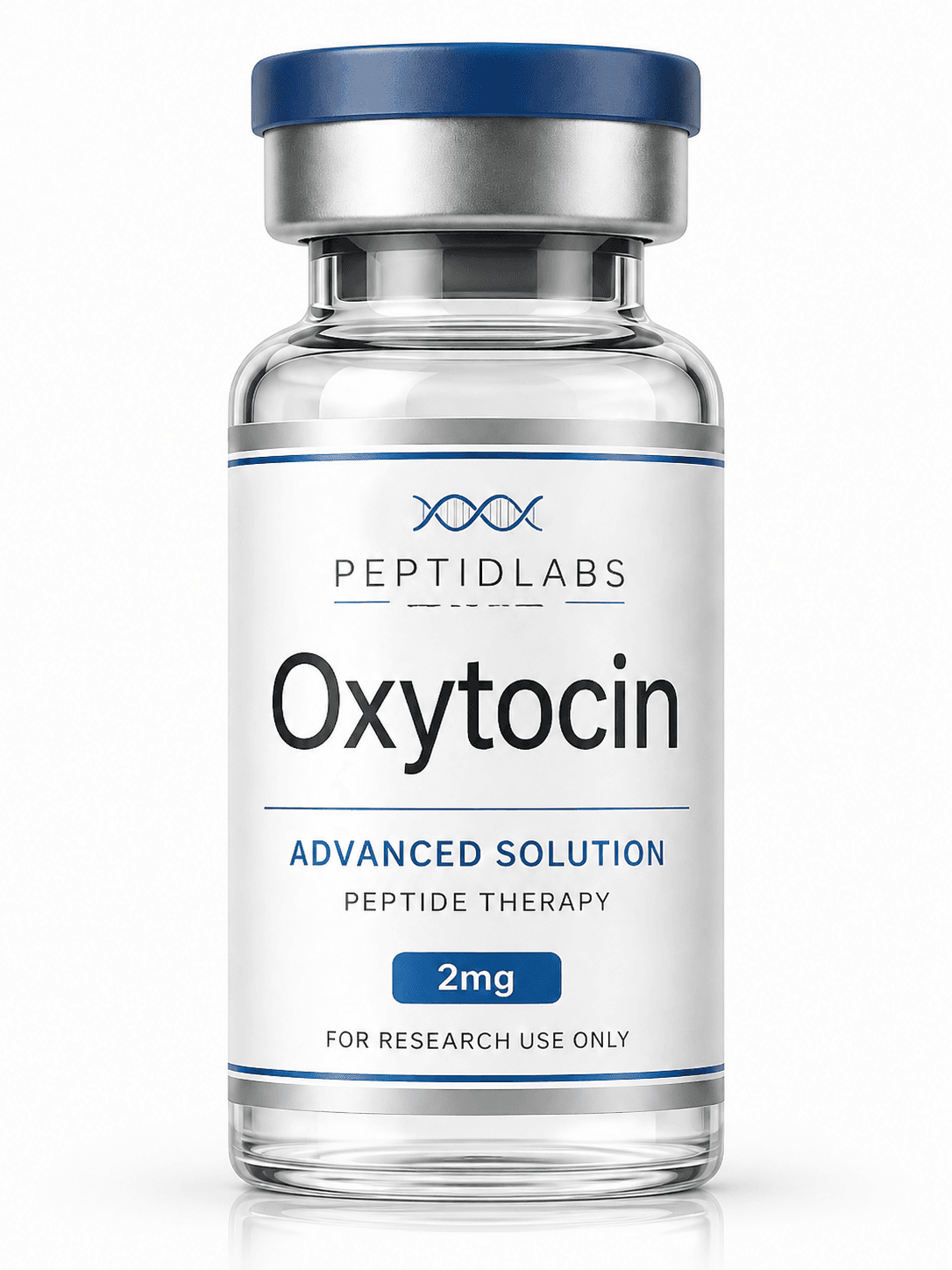
99%+ · 2mg · Lyophilized
Bulk discount
3+ pcs
€23.75
−5%
5+ pcs
€22.50
−10%
10+ pcs
€21.25
−15%
Discount is applied automatically at checkout.
Enter your email and we'll notify you when it's back:
Free shipping over €49
This product is sold strictly for in lab conditions (in vitro) research purposes. Not approved for human consumption.
Verified above 98%
98%+ verified — most batches reach 99%+
Included
Independent analysis from accredited laboratories
EU Shipping
3-7 days across the EU (Bulgaria — 1-2 days)
Secure Payment
Cash on delivery
Oxytocin
Neurohypophysial Peptide | Social Bonding & Reproductive Hormone
In short
9-amino acid neuropeptide studied in behavioral models for its role in social cognition and neuromodulation.
Best sellers
Education
Related resources
Ready-to-use starter kit
Oxytocin is a nine-amino acid peptide hormone naturally produced in the hypothalamus, often referred to as the "bonding hormone." At the molecular level, it binds to specific oxytocin receptors (OXTR), triggering calcium influx into cells and stimulating cellular signaling and smooth muscle contractions. Researchers study this peptide in in vitro and animal models to explore its mechanisms related to social behavior, empathy, and reproductive pathways. While there are FDA-approved synthetic oxytocin medications (such as Pitocin and Syntocinon), the product provided here is research-grade, intended strictly for laboratory studies and is not a drug for human consumption.
Research reagent for laboratory use only. Not a medicine. For medical questions, consult a physician.
Scientific review
Written by
Калина Тодорова
Magister Pharmaciae, MSc Pharmacy
Reviewed by
Борис Маринов
MSc Biochemistry & Molecular Biology
Reviewed on
Oxytocin is a nine-amino-acid peptide hormone and neuropeptide naturally produced in the hypothalamus and released by the posterior pituitary. Known as the "love hormone" or "bonding hormone," it plays fundamental roles in social bonding, trust, empathy, sexual reproduction, childbirth, and lactation. Synthetic oxytocin (Pitocin/Syntocinon) is FDA-approved for labor induction and postpartum hemorrhage control, while intranasal formulations are being researched for autism spectrum disorders, anxiety, depression, PTSD, chronic pain, and sexual dysfunction.
First synthesized hormone (du Vigneaud Nobel 1955) Social bonding + reduced amygdala anxiety Uterotonic + lactogenic peripheral effects Intranasal 24 IU for CNS applications
Binds to oxytocin receptors (OXTR) on uterine smooth muscle cells, triggering calcium influx and myometrial contractions. Also stimulates prostaglandin release to enhance uterine sensitivity.
Research demonstrates enhanced interpersonal trust, empathy, and in-group bonding. Acts on neural circuits in amygdala and prefrontal cortex.
Extensive research with mixed results. May benefit specific subpopulations; optimal dosing and patient selection remain under investigation.
Studies show reduced amygdala reactivity to social threats and normalized brain connectivity in social processing regions.
Dosing
The typical regimens you'll see in the published research - for reference when planning in vitro or in vivo experiments. Not medical advice.
Disclaimer
These are regimens discussed in the research literature, not medical advice. Consult a healthcare provider before use.
Timing
Hospital/clinical setting only
[Calculator]
Change water and dose · results update in real time
from product
Visual indicator
Pull to mark 25
25marks
Standard insulin syringe 1 ml (100 marks)
Concentration
1.00mg/ml
Dose volume
0.250ml
U-100 units
25units
Doses per vial
8doses
Recommended needle
29G / 1 ml insulin
Standard for peptide dosing — widely stocked
Cycle planner: vials for 12 weeks, cost, schedule
Opens full calculator
Results are reference values - for in vitro work. Verify against the published literature for the specific peptide.
[Step by step]
6 steps from a sealed vial to the injection. Plain language.
Peptide vial (2 mg), bacteriostatic water vial, 1 larger syringe (3-5 ml) for drawing water and 1 insulin (1 ml) for doses. Alcohol swabs for sanitizing the caps.
Wash your hands before starting.
Wipe the rubber cap of the water vial with an alcohol swab. Insert the needle, invert the vial and draw exactly 2 ml. Get the exact volume from the calculator.
Larger syringe = smaller error in volume.
Wipe the peptide vial cap. Tilt the vial 45° and release the water SLOWLY down the inner wall. Peptides are fragile — a direct stream onto the powder denatures them.
SLOWLY · DOWN THE WALL · NOT ONTO THE POWDER.
Hold the vial between both palms and swirl slowly. DO NOT shake or flip sharply — peptides break down under mechanical stress.
DON'T SHAKE. Like tea — not like a cocktail.
The powder should fully dissolve. The solution is clear, no visible particles. If cloudy or with sediment — discard (wrong water or bad batch).
Clear = OK. Cloudy = discard.
With the insulin syringe draw the exact marks from the calculator. Swab the skin (abdomen 5 cm around the navel, thigh, or buttock), pinch a fold, insert at 45-90° and inject slowly.
Rotate sites every injection to avoid lipohypertrophy.
Schedule
Hospital/clinical setting only
This is a hospital/clinical procedure performed by healthcare professionals
Dilute oxytocin in compatible IV solution per facility protocol
Typical dilution: 10 units in 1000mL = 10 mU/mL
Use infusion pump for precise rate control
Monitor uterine contractions and fetal heart rate continuously
Adjust rate based on clinical response and safety parameters
Have emergency medications available (terbutaline for tocolysis)
Generally well-tolerated with minimal systemic effects at research doses
Common side effects: mild headache, nasal irritation, occasional nausea
Monitor electrolytes if exceeding 24 IU daily long-term
May transiently affect blood pressure
Not recommended during pregnancy without medical supervision
Effects on in-group bias noted - be aware of social context
Consult healthcare provider before use, especially with psychiatric conditions
References
Links to peer-reviewed publications on PubMed, cited in the peptide's scientific profile.
Intranasal Oxytocin for Obesity (2024)
Human RCT | N=61 adults with obesity | 24 IU four times daily | 8 weeks | NEJM Evidence
Treatment did not result in weight loss but showed significant reduction in caloric intake at test meals and improvement in mental health-related quality of life. No serious adverse events.
View the studyOxytocin Effects on Social Cognition in Schizophrenia (2023)
Human RCT | N=68 | 24 IU twice daily | 12 weeks | Schizophrenia Research
While no significant advantage over placebo on primary social cognition outcomes, oxytocin showed modest improvement in social functioning and within-group reduction in negative symptoms.
View the studyIntranasal Oxytocin in Autism Spectrum Disorder (2021)
Human Phase 2 RCT | N=290 children/adolescents | 48 IU daily | 24 weeks | NEJM
Large randomized controlled trial found intranasal oxytocin did not significantly improve social functioning in children and adolescents with ASD compared to placebo, highlighting need for better patient selection and dosing strategies.
View the studyOxytocin Augmented Prolonged Exposure Therapy for PTSD (2019)
Human RCT | Veterans with PTSD | 40 IU intranasal | Combined with PE therapy
Participants receiving oxytocin demonstrated lower PTSD and depression symptoms during prolonged exposure therapy and reported higher therapeutic alliance scores compared to placebo.
View the studyChronic Intranasal Oxytocin Effects on Male Sexual Function (2012)
Human case study | 40 IU intranasal | Multi-week chronic use
First documented case of broad-spectrum benefits of chronic intranasal oxytocin on male sexual function including improved libido, erection quality, and orgasm intensity.
View the study
for longevity

for sexual health
No reviews yet. Be the first.
Share your experience with this peptide. We publish after a short moderation.