sampleAntiparasitic & antiviral
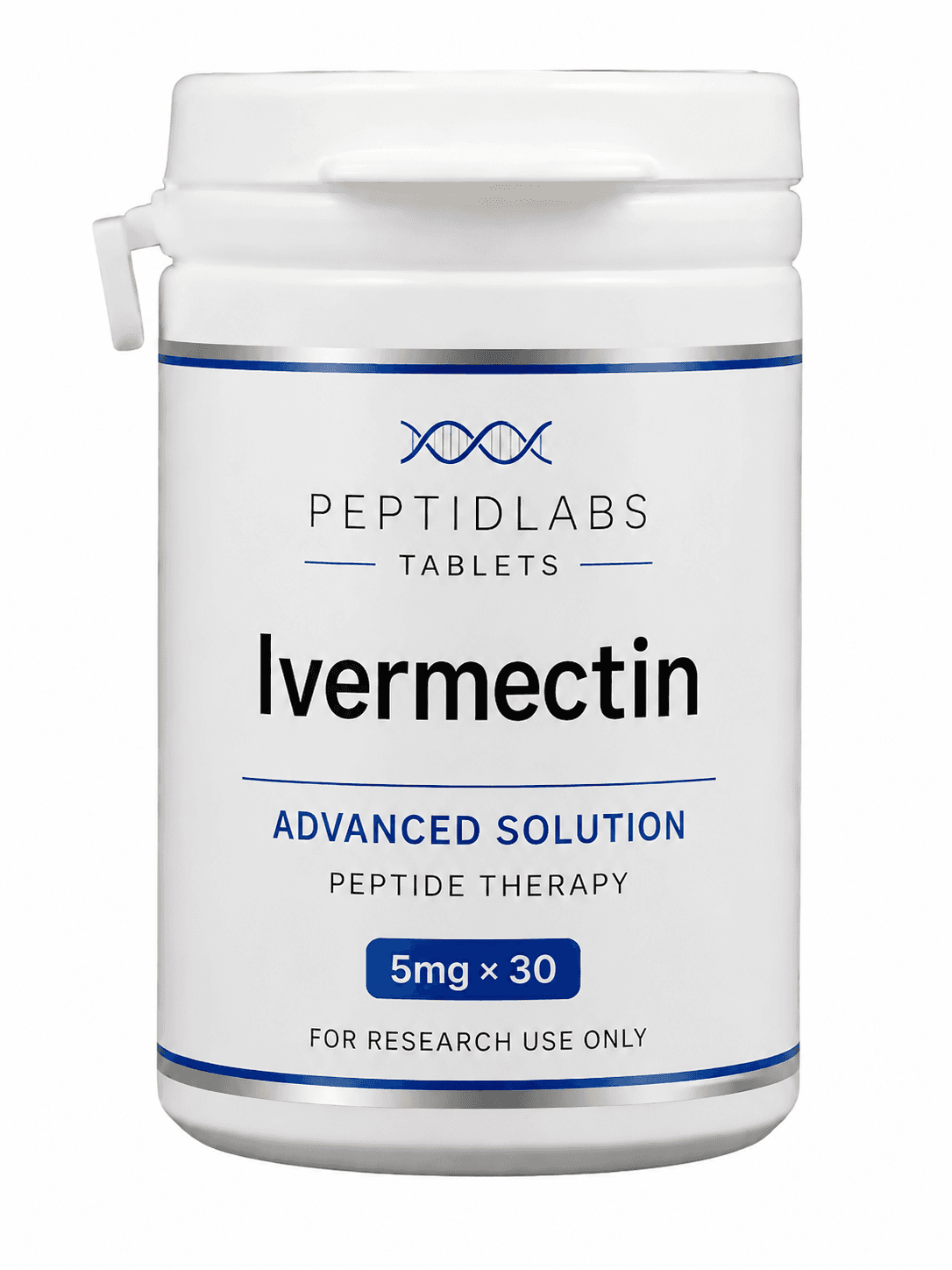
99%+ · 5mg · Tablets · MW: 875.1
Bulk discount
3+ pcs
€23.75
−5%
5+ pcs
€22.50
−10%
10+ pcs
€21.25
−15%
Discount is applied automatically at checkout.
Enter your email and we'll notify you when it's back:
Free shipping over €49
This product is sold strictly for in lab conditions (in vitro) research purposes. Not approved for human consumption.
Verified above 98%
98%+ verified — most batches reach 99%+
Included
Independent analysis from accredited laboratories
EU Shipping
3-7 days across the EU (Bulgaria — 1-2 days)
Secure Payment
Cash on delivery
Ivermectin Tablets 5 mg × 30
Macrocyclic Lactone | Glutamate-Gated Cl⁻ Channel Agonist | Antiparasitic Research
In short
Studied for how it may help your body clear out unwanted parasites and support your natural immune defenses.
Ivermectin is a semisynthetic compound from the macrocyclic lactone group, noted for its antiparasitic activity. At the molecular level, it selectively binds to chloride channels in the nerve and muscle cells of invertebrates, causing their paralysis while sparing the mammalian central nervous system. In laboratory settings (in vitro and in animal models), scientists study the molecule to understand its interactions with various parasites and cellular pathways. Although approved medications containing this active ingredient exist on the market, this specific product is research-grade and is strictly not a drug for human or veterinary use.
Research reagent for laboratory use only. Not a medicine. For medical questions, consult a physician.
Best sellers
Related resources
Scientific review
Written by
Калина Тодорова
Magister Pharmaciae, MSc Pharmacy
Reviewed by
Борис Маринов
MSc Biochemistry & Molecular Biology
Reviewed on
Ivermectin is a mixture of 22,23-dihydroavermectin B1a (≥80%) and B1b (≤20%) — semi-synthetic macrocyclic lactones with broad-spectrum antiparasitic activity. The compound is poorly absorbed by mammalian cells due to P-glycoprotein efflux at the blood-brain barrier, providing the selectivity that underpins its safety profile.
WHO Essential Medicines List since 1987 Nobel Prize 2015 (Ōmura, Campbell — antiparasitic discovery) >3 billion human doses administered globally Strong oral bioavailability — established pharmacokinetics
Ivermectin selectively binds glutamate-gated chloride channels in invertebrate neurons and muscle cells, opening them and producing chloride influx that hyperpolarizes the cell. The result is paralysis. Mammalian glutamate-gated chloride channels do not exist in nervous tissue accessible at therapeutic doses, providing the species-selective therapeutic window.
Effective against Onchocerca, Strongyloides, Wuchereria, scabies (Sarcoptes), and head lice. Mass drug administration programs (MectizanⓇ) have controlled onchocerciasis in West Africa for decades.
Adverse events at therapeutic doses are typically mild and self-limited — dizziness, nausea, transient hypotension. The Mazzotti reaction (skin/eye inflammation) can occur when high parasite loads die rapidly. Neurological signs at supratherapeutic doses have been documented; the safety margin in mammals is wide due to P-glycoprotein-mediated CNS exclusion.
References
Links to peer-reviewed publications on PubMed, cited in the peptide's scientific profile.
Ivermectin and antiparasitic mass drug administration
Review | Trends Parasitol
Comprehensive review of ivermectin's role in onchocerciasis control programs — the largest mass drug administration effort in history.
View the study
for longevity

for sexual health
No reviews yet. Be the first.
Share your experience with this peptide. We publish after a short moderation.