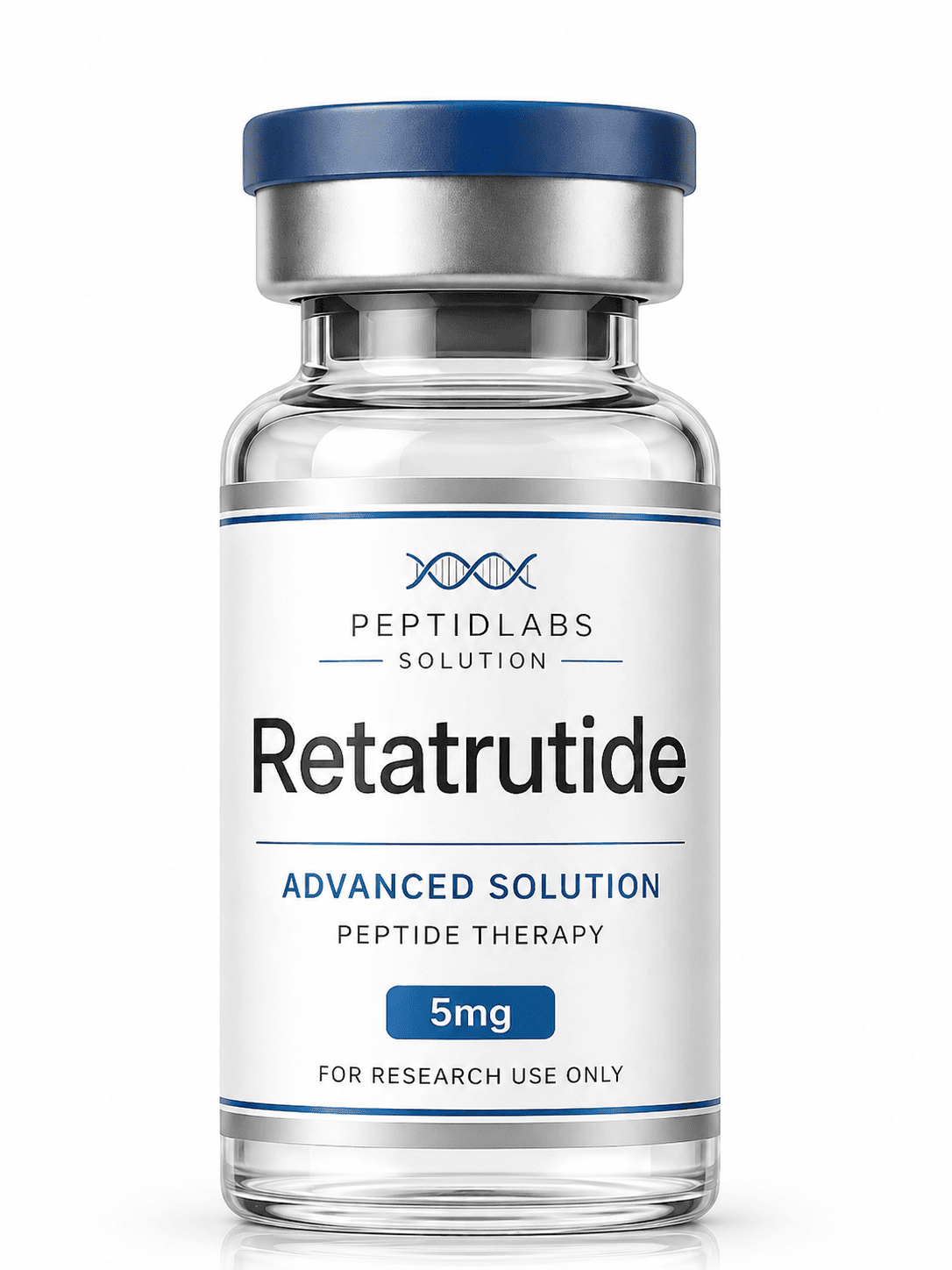
samplefor visceral fat
98%+ · 10mg · Lyophilized
Bulk discount
3+ pcs
€122.55
−5%
5+ pcs
€116.10
−10%
10+ pcs
€109.65
−15%
Discount is applied automatically at checkout.
Enter your email and we'll notify you when it's back:
Free shipping over €49
This product is sold strictly for in lab conditions (in vitro) research purposes. Not approved for human consumption.
Verified above 98%
98%+ verified — most batches reach 99%+
Included
Independent analysis from accredited laboratories
EU Shipping
3-7 days across the EU (Bulgaria — 1-2 days)
Secure Payment
Cash on delivery
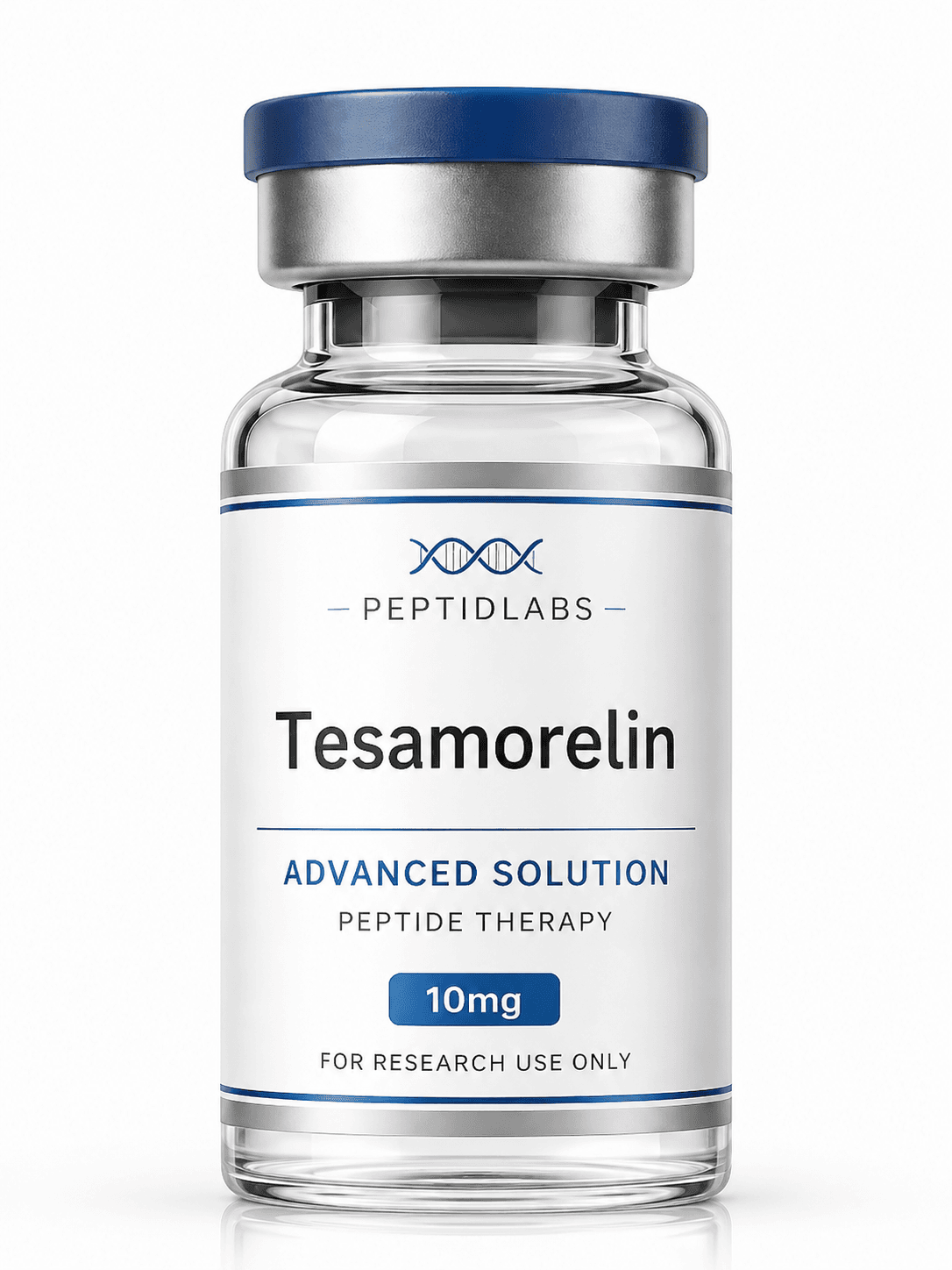
Tesamorelin
GHRH Analog | Visceral Fat Reduction
In short
DPP-4 resistant GHRH analog studied in clinical models for the reduction of visceral adipose tissue in lipodystrophy.
Best sellers
Related resources
Ready-to-use starter kit
Tesamorelin is a synthetic analogue of the growth hormone-releasing hormone (GHRH), consisting of a 44-amino acid chain. At the molecular level, it binds to specific receptors to stimulate the natural, pulsatile release of growth hormone. In scientific studies and laboratory models, the molecule is being investigated for its potential to selectively target and reduce visceral adipose tissue. While there are FDA-approved medications utilizing this active ingredient, the peptide offered here is strictly research-grade and is not a medication for human consumption.
Research reagent for laboratory use only. Not a medicine. For medical questions, consult a physician.
Scientific review
Written by
Калина Тодорова
Magister Pharmaciae, MSc Pharmacy
Reviewed by
Борис Маринов
MSc Biochemistry & Molecular Biology
Reviewed on
Tesamorelin is an FDA-approved synthetic growth hormone-releasing hormone (GHRH) analog designed for treating HIV-associated lipodystrophy. This 44-amino acid peptide with a trans-3-hexenoic acid modification selectively reduces visceral adipose tissue while preserving subcutaneous fat, making it unique among growth hormone therapies.
Only FDA-approved GHRH analog (Egrifta 2010) Selective visceral fat reduction 15-20% (Falutz NEJM 2007) ~26 min half-life - moderately stabilized without disrupting pulse Trans-3-hexenoyl modification for DPP-4 resistance
Subcutaneous injection provides optimal bioavailability for GHRH receptor binding and pulsatile GH release stimulation
FDA-approved indication showing 15-20% visceral fat reduction in clinical trials
Unique mechanism spares subcutaneous fat while reducing harmful visceral adiposity
Maintained weight loss with continuous treatment over 52+ weeks in clinical studies
Dosing
The typical regimens you'll see in the published research - for reference when planning in vitro or in vivo experiments. Not medical advice.
Disclaimer
These are regimens discussed in the research literature, not medical advice. Consult a healthcare provider before use.
Timing
Evening injection preferred for natural GH rhythm support
[Calculator]
Change water and dose · results update in real time
from product
Visual indicator
Pull to mark 5.0
5.0marks
Standard insulin syringe 1 ml (100 marks)
Concentration
5.00mg/ml
Dose volume
0.050ml
U-100 units
5.0units
Doses per vial
40doses
Recommended needle
29G–30G / 1 ml insulin
Small volume — draw slowly; 30G works for finer precision
Cycle planner: vials for 12 weeks, cost, schedule
Opens full calculator
Results are reference values - for in vitro work. Verify against the published literature for the specific peptide.
[Step by step]
6 steps from a sealed vial to the injection. Plain language.
Peptide vial (10 mg), bacteriostatic water vial, 1 larger syringe (3-5 ml) for drawing water and 1 insulin (1 ml) for doses. Alcohol swabs for sanitizing the caps.
Wash your hands before starting.
Wipe the rubber cap of the water vial with an alcohol swab. Insert the needle, invert the vial and draw exactly 2 ml. Get the exact volume from the calculator.
Larger syringe = smaller error in volume.
Wipe the peptide vial cap. Tilt the vial 45° and release the water SLOWLY down the inner wall. Peptides are fragile — a direct stream onto the powder denatures them.
SLOWLY · DOWN THE WALL · NOT ONTO THE POWDER.
Hold the vial between both palms and swirl slowly. DO NOT shake or flip sharply — peptides break down under mechanical stress.
DON'T SHAKE. Like tea — not like a cocktail.
The powder should fully dissolve. The solution is clear, no visible particles. If cloudy or with sediment — discard (wrong water or bad batch).
Clear = OK. Cloudy = discard.
With the insulin syringe draw the exact marks from the calculator. Swab the skin (abdomen 5 cm around the navel, thigh, or buttock), pinch a fold, insert at 45-90° and inject slowly.
Rotate sites every injection to avoid lipohypertrophy.
Schedule
Evening injection preferred for natural GH rhythm support
Remove vial from refrigerator (powder should be stored at 2-8°C) and allow to reach room temperature
Egrifta SV: Add 0.5 mL sterile water to 2 mg vial
Egrifta WR: Add 1.3 mL bacteriostatic water to 11.6 mg vial
Gently swirl to dissolve - do not shake vigorously to prevent protein denaturation
Solution should be clear and colorless - do not use if cloudy or contains particles
Withdraw appropriate dose (typically 0.35 mL for 1.4 mg from SV preparation)
Inject subcutaneously in abdomen, rotating sites to prevent lipodystrophy
SV: Use immediately after mixing, discard any remaining solution. WR: Store at room temperature (20-25°C) for up to 7 days — do NOT refrigerate as it may cause precipitation
Arthralgia (joint pain)
common·Falutz NEJM 2007
Peripheral edema
common
Paresthesia
uncommon
Injection-site reaction
common
Elevated blood glucose
uncommon
Compatibility
The pairings below come from research literature and established biohacker stacking patterns. Click a card for the full reasoning - when the partner is in our catalog you'll see a direct order link too.
This is a literature overview, not medical advice. Pairs not listed are not proven safe - they simply lack enough published data.
References
Links to peer-reviewed publications on PubMed, cited in the peptide's scientific profile.
Cardiovascular Risk Assessment (2025)
Humans | 2 mg daily | 26 weeks | 0.40% reduction in 10-year ASCVD risk
Recent meta-analysis demonstrating cardiovascular risk reduction through improved metabolic parameters
View the studyAnti-inflammatory Effects Study (2021)
Humans | 2 mg daily | 12 months | Reduced pro-inflammatory mediators
Comprehensive analysis showing reduced VEGFA, TGFB1, and CSF1 inflammatory markers beyond metabolic effects
View the studyNAFLD Treatment Trial (2019)
Humans | 2 mg daily | 12 months | 37% liver fat reduction
Landmark study demonstrating significant hepatic fat reduction and prevented fibrosis progression in HIV patients with NAFLD
View the studyCognitive Enhancement Study (2012)
Humans | 1 mg daily | 20 weeks | Improved executive function and verbal memory
Randomized controlled trial showing favorable cognitive effects in both healthy older adults and those with mild cognitive impairment using 1mg daily dose
View the studyCTR-1011 Extended Safety Study (2011)
Humans | 2 mg daily | 26-52 weeks | 69% achieved ≥8% VAT reduction
Long-term safety and efficacy study showing sustained visceral fat reduction with 69% responder rate vs 33% placebo
View the studyLIPO-010 FDA Approval Trial (2010)
Humans | 2 mg subcutaneous daily | 26 weeks | 15.4% VAT reduction vs placebo
Pivotal Phase III trial demonstrating significant visceral adipose tissue reduction (-24 ± 41 cm² vs +2 ± 35 cm² placebo, p < 0.001) in HIV patients with lipodystrophy
View the study
for longevity

for sexual health
No reviews yet. Be the first.
Share your experience with this peptide. We publish after a short moderation.